
Ethics in Talent Management and Future of Work Paradigm Shifts: Algorithmic Governance, Employee Privacy, and the Blended Workforce
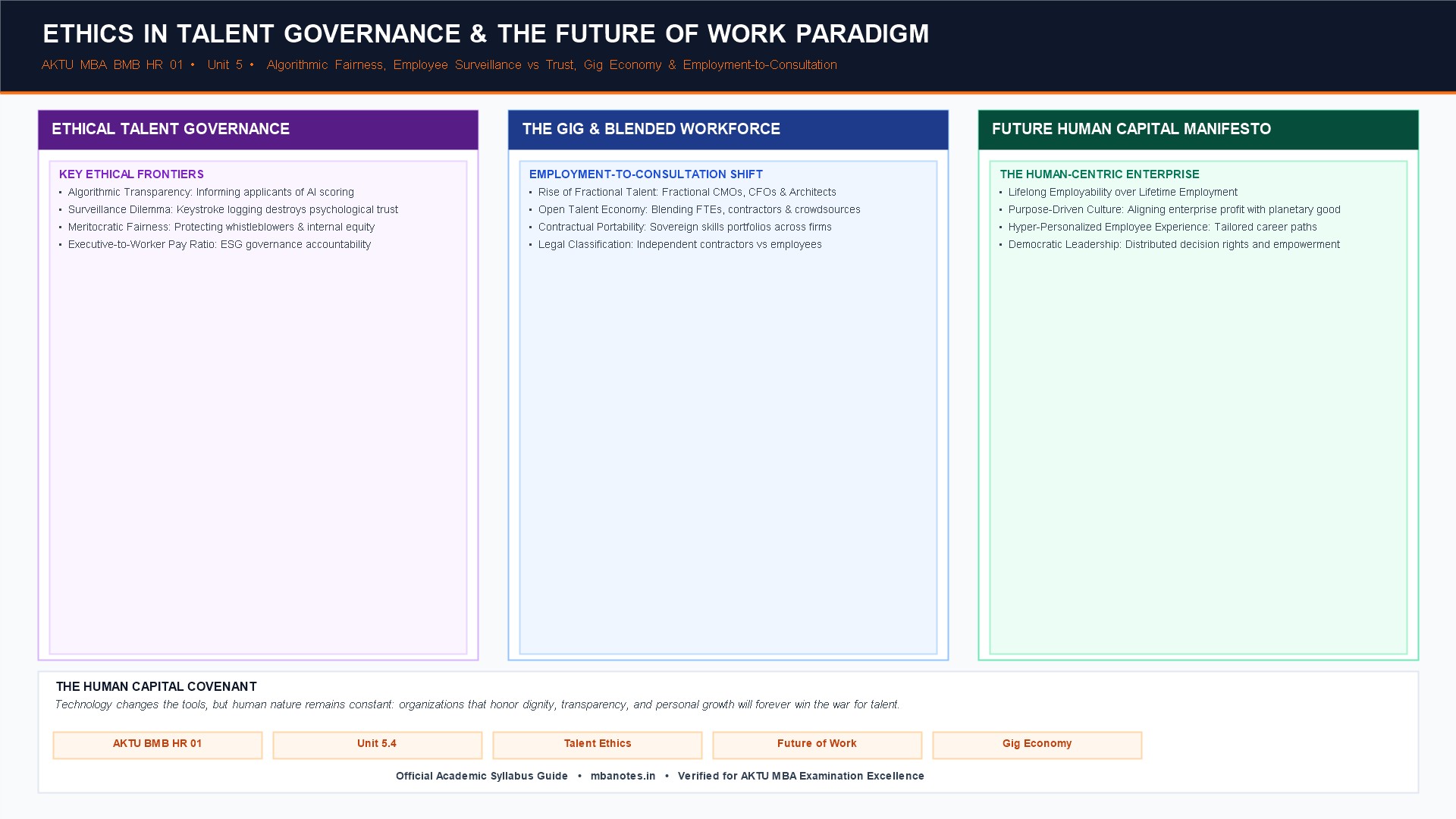
Figure 5.4: Future of Work & Ethics - Algorithmic Governance, the Fractional / Blended Workforce, and the Human-Centric Capital Covenant.
1. Foundations of Ethical Talent Governance: Principles & Regulatory Frameworks
Ethical Talent Governance is the systematic adherence to moral principles, human rights standards, legal regulations, and transparency protocols in all human capital decisions—including recruitment, compensation, performance evaluation, and workplace monitoring.
1.1 Emerging Global Regulatory Mandates
Worldwide legislative bodies are rapidly enacting strict legal frameworks to prevent exploitative human resource practices:
- EU Artificial Intelligence Act (2024): Formally classifies all AI systems used in recruitment, hiring, performance evaluation, task allocation, and promotion as "High-Risk AI Systems." Mandates strict algorithmic impact assessments, mandatory human oversight, and absolute prohibitions on biometric emotion recognition in workplaces.
- New York City Automated Employment Decision Tools (AEDT) Law (Local Law 144): Legally mandates that employers must conduct annual independent third-party bias audits on any automated tool used in hiring or promotion and publicly publish bias metrics on their career websites.
- Digital Personal Data Protection Act (DPDP Act, India, 2023): Enforces strict consent requirements, data minimization, and purpose limitation on employee personal data collected by corporate employers.
2. Surveillance vs. Trust: The Ethics of Workplace Monitoring & "Bossware"
The post-pandemic rise of remote and hybrid work witnessed an aggressive surge in employee surveillance technologies (colloquially termed "Bossware")—including keystroke loggers, webcam eye-tracking, periodic screenshot capture, and mouse-movement tracking software.
| Dimension | Surveillance-Driven Culture ("Bossware") | Trust-Based Governance Culture |
|---|---|---|
| Core Operational Assumption | Theory X: Employees are naturally lazy, untrustworthy, and will shirk responsibilities unless continuously watched. | Theory Y: Employees are self-motivated professionals who thrive when granted autonomy, clear goals, and ownership. |
| Tracking Mechanisms | Keystrokes per minute, random webcam snaps, active tab tracking, GPS monitoring. | Objective deliverable completion, sprint milestones, client satisfaction, peer review. |
| Psychological Impact | Severe anxiety, chronic stress, hyper-vigilance, collapse of psychological safety, and resentment. | High psychological safety, creative risk-taking, intrinsic motivation, and mutual loyalty. |
| Employee Behavioral Response | "Mouse jiggler" hardware evasion, fake typing scripts, and superficial digital presenteeism. | Deep focused work, discretionary collaborative effort, and high problem-solving engagement. |
| Impact on Star Talent | Rapid resignation of top performers who refuse to be micromanaged like mechanical cogs. | Magnetic talent retention and high employer brand equity. |
3. Architectural Transformation: The Blended & Fractional Workforce
The traditional 20th-century model of lifetime full-time employment has splintered. The future organization functions as a fluid, permeable network orchestrating a Blended Workforce comprising four distinct human capital tiers:
- Core Full-Time Talent (The Strategic Core): Retained for mission-critical strategic decision-making, enterprise IP creation, and cultural leadership.
- Fractional Executives: Veteran C-suite specialists (e.g., Fractional CMO, Fractional Chief AI Officer) engaged for 10-15 hours per week to provide top-tier strategic guidance to startups and mid-market firms without the multimillion-dollar overhead of a full-time executive.
- Specialized Gig / Contingent Specialists: Expert freelance coders, UX researchers, and legal consultants contracted dynamically for specific project lifecycles via digital platforms.
- Autonomous AI Agents & Synthetic Coworkers: Algorithmic systems executing end-to-end data pipelines, customer support triage, and automated document synthesis alongside human teams.
4. Strategic Governance: The 4-Pillar Algorithmic HR Auditing Framework
To deploy artificial intelligence ethically and protect against legal liability, human resource leaders enforce a 4-pillar algorithmic auditing protocol:
| Pillar | Governance Objective | Operational Verification Check |
|---|---|---|
| 1. Transparency & Notice | Ensure candidates are fully informed regarding AI usage. | Provide explicit pre-application notice: "This application uses automated semantic parsing; candidates may request human review." |
| 2. Adverse Impact Auditing | Mathematically verify absence of demographic bias. | Conduct annual statistical tests against the 80% (Four-Fifths) rule across gender, caste, ethnicity, and disability status. |
| 3. Explainability (XAI) | Demystify algorithmic scoring logic. | Eliminate "black box" neural nets in hiring; ensure the model generates interpretable rationales for candidate scores. |
| 4. Human-in-the-Loop (HITL) | Maintain ultimate human moral agency. | No individual may be rejected or terminated solely by automated software; final decisions require human manager sign-off. |
5. Visual Knowledge Blueprint: Talent Ethics & Future of Work Architecture
The visual blueprint below details the regulatory landscape (EU AI Act, NYC AEDT), the surveillance vs trust matrix, the blended workforce tiers, and the 4-pillar algorithmic auditing framework.
6. AKTU Examination Focus: High-Frequency Questions & Model Answers
Section A: Short Technical Concept Drill (2 Marks Each)
Q1: How does the EU AI Act (2024) classify artificial intelligence used in recruitment and human resources?
Answer: The EU AI Act formally classifies all AI systems deployed in recruitment, task allocation, evaluation, and promotion as "High-Risk AI Systems," subjecting them to mandatory bias audits and human oversight.
Q2: What is "Bossware"?
Answer: Bossware refers to invasive employee surveillance software (such as keystroke loggers, continuous webcam captures, and mouse activity trackers) used to monitor remote workers.
Q3: Define the "Blended Workforce" concept.
Answer: A blended workforce is a human capital structure that combines full-time permanent employees with fractional executives, contingent gig freelancers, and autonomous AI systems.
Q4: What is the Human-in-the-Loop (HITL) requirement in ethical AI?
Answer: HITL mandates that AI tools must only serve as decision-support instruments and that high-stakes talent decisions (hiring, promotion, termination) must always be finalized by human managers.
Q5: What is a Fractional Executive?
Answer: A highly experienced executive (e.g., Fractional CFO or CMO) who provides part-time, high-level strategic leadership to multiple organizations simultaneously on a retainer basis.
Section B & C: Comprehensive Analytical Questions (10 Marks Each)
Q6: Critically examine the ethical dilemmas arising from the use of Artificial Intelligence and digital surveillance in human resource management. Contrast surveillance-based cultures with trust-based governance. (10 Marks)
Model Answer Structure:
- The Technological Frontier: Outline the rapid adoption of algorithmic screening and digital surveillance tools in modern corporate HR.
- Key Ethical Dilemmas:
- Algorithmic Bias: Machine learning reproducing historical prejudices (cite Amazon's failed tool).
- Privacy & Dignity: Invasive continuous keystroke and webcam tracking eroding human dignity.
- Transparency Deficit: Opaque black-box models denying candidates explainable reasons for adverse employment actions.
- Comparative Contrast:
- Surveillance culture (Theory X, stress, mouse-jiggler evasion, loss of top talent).
- Trust-based culture (Theory Y, psychological safety, outcome-based evaluation, high innovation).
- Regulatory Safeguards: Detail the EU AI Act high-risk classification and NYC Local Law 144 bias audit requirements.
Q7: Detail the emerging architecture of the Future of Work. How must organizations manage a Blended Workforce encompassing permanent employees, fractional executives, gig workers, and AI agents? (10 Marks)
Model Answer Structure:
- The Disruption of Traditional Employment: Explain the transition from lifetime monolithic corporate ladders to dynamic, networked human capital ecosystems.
- The 4 Tiers of the Blended Workforce:
- Core Talent: Strategic vision, culture keepers, proprietary core IP.
- Fractional Leadership: High-impact, flexible executive guidance without full-time fixed liabilities.
- Gig & Contingent Specialists: Agility for specialized, short-term project transformations.
- AI Synthetic Coworkers: Autonomous automation handling routine tasks.
- Managerial & Cultural Challenges:
- IP protection and data security across external boundaries.
- Fostering team cohesion and shared purpose across permanent and contingent cohorts.
- Equitable compensation and psychological integration.
- The Human-Centric Covenant: Conclude on the imperative to place human flourishing, empathy, and ethical governance at the center of the future enterprise.
7. Strategic Summary & Key Takeaways
- Surveillance Kills Culture: Tracking keystrokes and webcams breeds paranoia and drives away star performers. Manage through clear outcomes, mutual trust, and accountability.
- Compliance is Non-Negotiable: Global laws like the EU AI Act and NYC Local Law 144 enforce strict accountability on algorithmic tools; companies must conduct annual bias audits.
- The Future is Fluid: The most successful enterprises of the next decade will orchestrate blended talent ecosystems, seamlessly integrating core employees, fractional leaders, gig specialists, and AI agents.
Discussion & Questions
0 CommentsAcademic insights, questions, and conceptual clarifications from students & faculty.
No questions or comments yet
Have a doubt about this topic, an exam tip, or a conceptual perspective? Start the discussion below!
Leave a Comment / Ask a Question
Your email address will not be published. Required fields are marked *