
HR Analytics Frameworks: Cascio & Boudreau's LAMP Model, The HR Scorecard, and Huselid's Workforce Scorecard
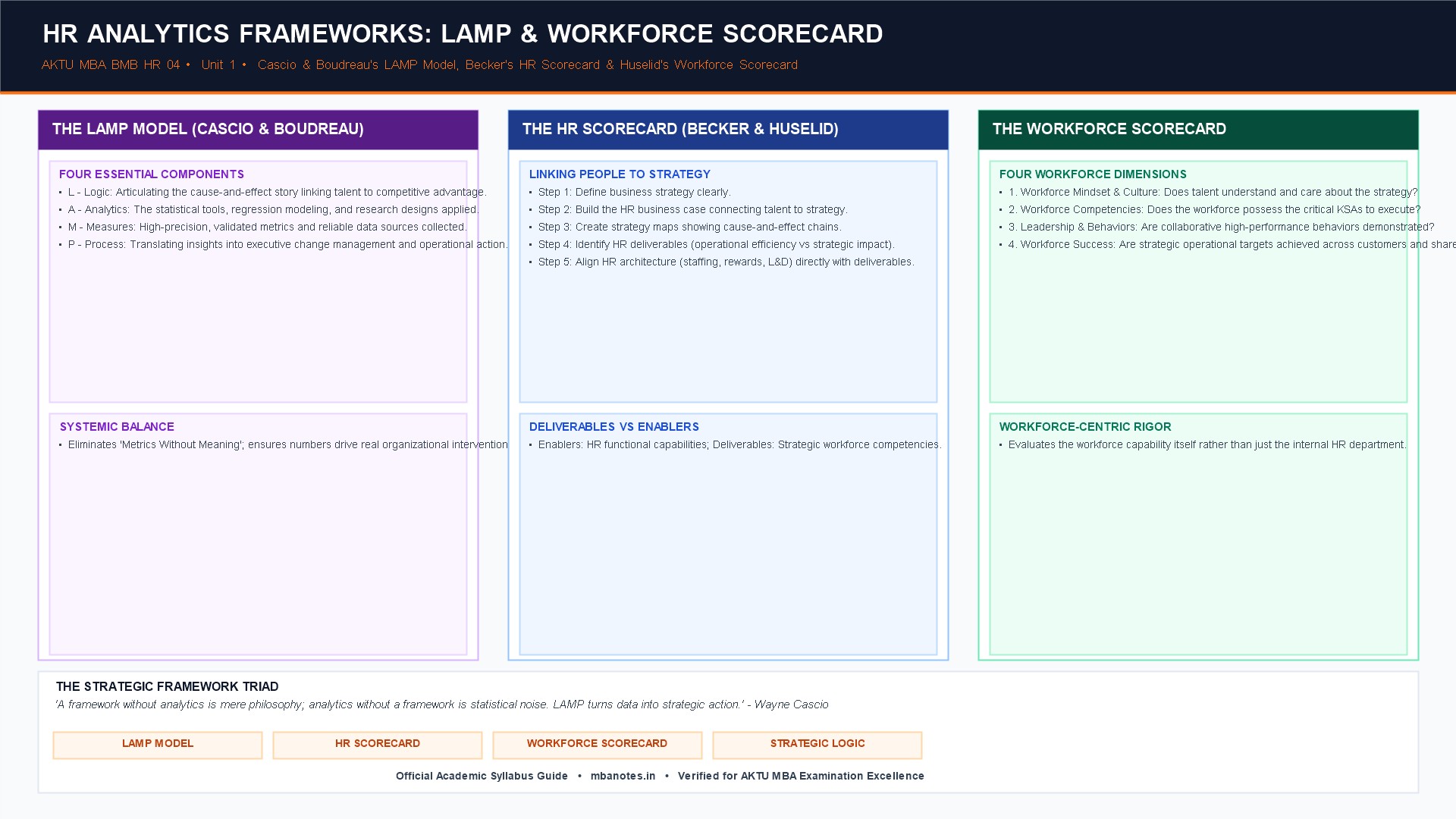
Figure 1.4: Strategic Framework Triad - The LAMP Model (Logic, Analytics, Measures, Process) and Workforce Scorecards.
1. The Need for Strategic Frameworks: Avoiding 'Metrics Without Meaning'
A fatal trap encountered by organizations investing in HR analytics is the obsession with software tools over strategic thinking. Companies invest millions in cloud dashboards that generate hundreds of charts (headcount by age, training hours by location, gender splits by department), only for executive leadership to ask: "So what? How does any of this help us beat our competitors or grow our operating margins?"
Data without strategic context is mere statistical noise. A Strategic HR Framework provides the intellectual scaffolding that connects human behavioral inputs directly to commercial enterprise outputs. It ensures that every metric tracked has an explicit hypothesis explaining how it drives shareholder value.
2. The LAMP Model (Wayne Cascio & John Boudreau)
In their seminal book Investing in People, Dr. Wayne Cascio and Dr. John Boudreau established the LAMP Model, identifying four essential components required to generate true business value from human capital data:
| LAMP Pillar | Core Operational Dimension | Critical Risk if Pillar is Missing |
|---|---|---|
| L – Logic | The strategic narrative connecting talent to competitive success. Answers: "What is the cause-and-effect story linking workforce capabilities to customer satisfaction and profit?" | Collecting random, disconnected numbers that provide zero actionable strategic guidance. |
| A – Analytics | The statistical modeling, research design, and data science techniques applied (e.g., multiple regression, quasi-experiments, Markov analysis). | Superficial reporting of averages that confuse correlation with causation. |
| M – Measures | The high-precision, psychometrically validated metrics, reliable data sources, and clean data tables collected from enterprise systems. | Garbage In, Garbage Out (GIGO); making major strategic bets based on corrupted, inaccurate data. |
| P – Process | The organizational change management, storytelling, and communication discipline required to convince business leaders to take action based on data. | Brilliant statistical models that gather dust on a shelf because leaders ignore the insights. |
3. The HR Scorecard (Brian Becker, Mark Huselid & Dave Ulrich)
Building upon Kaplan & Norton's Balanced Scorecard, Becker, Huselid, and Ulrich engineered the HR Scorecard to integrate human resource management into enterprise strategy maps. It operates through a disciplined 5-step implementation sequence:
- Step 1: Clearly Define Business Strategy: Articulate the firm's competitive differentiator (e.g., product innovation vs operational cost leadership).
- Step 2: Build the HR Business Case: Construct empirical arguments demonstrating how talent capabilities drive the core business strategy.
- Step 3: Create Strategy Maps: Map cause-and-effect linkages showing how HR practices influence employee behaviors, which influence customer outcomes, which drive financial returns.
- Step 4: Identify HR Deliverables: Critically distinguish between two types of HR outputs:
- HR Enablers (Operational Efficiency): Routine functional delivery (e.g., cost-per-hire, transaction processing speed).
- HR Deliverables (Strategic Impact): Core workforce competencies that drive competitive differentiation (e.g., retention of elite cloud engineers, innovative cross-functional teamwork).
- Step 5: Align HR Architecture: Design recruitment, compensation, performance management, and training systems to reinforce the identified HR deliverables.
4. The Workforce Scorecard: Evaluating Human Capital Execution
In their follow-up work, Mark Huselid, Brian Becker, and Richard Beatty realized that measuring the HR department's activities (as done in the HR Scorecard) was insufficient. The ultimate test of talent strategy is measuring the workforce itself. The Workforce Scorecard evaluates workforce capability across four sequential dimensions:
| Workforce Dimension | Core Evaluative Question | Standard Metric Yardstick |
|---|---|---|
| 1. Workforce Mindset & Culture | Does the workforce understand the company strategy and care about executing it? | Strategic alignment survey scores, employee engagement index, culture audit scores. |
| 2. Workforce Competencies | Does the workforce possess the critical knowledge, skills, and abilities (KSAs) needed? | Competency gap analysis scores, technical certifications per engineer, bench strength ratio. |
| 3. Leadership & Workforce Behaviors | Do employees and leaders consistently demonstrate high-performance behaviors daily? | Cross-functional collaboration indices, innovation suggestions submitted, 360-degree ratings. |
| 4. Workforce Success | Has the workforce accomplished the key strategic operational targets required? | Revenue per employee (FTE), customer retention rate, cycle time reduction, scrap rate PPM. |
6. Comprehensive Comparison: LAMP vs HR Scorecard vs Workforce Scorecard
| Framework | Originators | Primary Analytical Focus | Core Structural Components | Best Applied For |
|---|---|---|---|---|
| The LAMP Model | Wayne Cascio & John Boudreau (2008) | The measurement and decision-making system required to convert talent data into organizational action. | Logic, Analytics, Measures, Process. | Designing and executing rigorous people analytics research projects. |
| The HR Scorecard | Brian Becker, Mark Huselid & Dave Ulrich (2001) | Aligning the internal HR function, policies, and practices with the corporate strategy map. | 5-Step Alignment Model, HR Enablers vs Strategic Deliverables. | Restructuring the HR department to operate as a strategic business partner. |
| The Workforce Scorecard | Mark Huselid, Brian Becker & Richard Beatty (2005) | Evaluating the actual capabilities, culture, and operational execution of the entire employee workforce. | Mindset & Culture, Competencies, Behaviors, Workforce Success. | Auditing organizational capability and human capital execution for the Board. |
7. AKTU Exam Focus: Short Notes & Solved Model Questions
Section A: 2-Mark High-Frequency Core Concepts
Q1: What does the acronym LAMP stand for in HR analytics?
Answer: Logic, Analytics, Measures, and Process—formulated by Wayne Cascio and John Boudreau as the four pillars of strategic talent measurement.
Q2: Why is the 'Logic' pillar critical in the LAMP framework?
Answer: Logic articulates the strategic cause-and-effect story connecting talent investments to competitive advantage, preventing organizations from collecting pointless 'metrics without meaning.'
Q3: Distinguish between HR Enablers and HR Deliverables in the HR Scorecard.
Answer: HR Enablers are operational capabilities of the HR department itself (e.g., fast recruiting), while HR Deliverables are strategic workforce outcomes that drive competitive advantage (e.g., retention of critical talent).
Q4: Name the four dimensions of the Workforce Scorecard.
Answer: (1) Workforce Mindset and Culture, (2) Workforce Competencies, (3) Leadership and Workforce Behaviors, and (4) Workforce Success.
Q5: How does the Workforce Scorecard differ fundamentally from the HR Scorecard?
Answer: The HR Scorecard evaluates the efficiency and alignment of the HR department, whereas the Workforce Scorecard directly measures the capabilities, culture, and outputs of the employee workforce itself.
Section B/C: 10-Mark Detailed Exam Questions
Q6: Detailed explanation: Discuss the concept, components, and strategic significance of Cascio and Boudreau's LAMP Model. Explain how the four pillars ensure that people analytics leads to real organizational change.
Structured Model Answer:
- Conceptual Genesis: Explain why companies fail with metrics without meaning and the necessity of strategic scaffolding.
- The Four LAMP Pillars:
- Logic: Strategic cause-and-effect narrative linking talent to business success.
- Analytics: Statistical tools, regression models, and research design.
- Measures: Psychometrically validated, clean data sources.
- Process: Change management, data storytelling, and executive persuasion.
- Risk of Pillar Failure: Analyze the specific organizational failure that occurs if any single pillar (L, A, M, or P) is missing.
Q7: Compare and contrast Becker & Huselid's HR Scorecard with Huselid's Workforce Scorecard. Detail the 5-step implementation methodology of the HR Scorecard and explain the four dimensions of workforce execution.
Structured Model Answer:
- Core Differences: Explain measuring the HR department (HR Scorecard) vs measuring total human capital capability (Workforce Scorecard).
- The 5-Step HR Scorecard Process:
- Define business strategy.
- Build the business case.
- Create strategy maps.
- Identify HR deliverables vs enablers.
- Align HR architecture.
- The Workforce Scorecard Dimensions: Detail Mindset & Culture, Competencies, Behaviors, and Workforce Success with concrete corporate KPIs.
Discussion & Questions
0 CommentsAcademic insights, questions, and conceptual clarifications from students & faculty.
No questions or comments yet
Have a doubt about this topic, an exam tip, or a conceptual perspective? Start the discussion below!
Leave a Comment / Ask a Question
Your email address will not be published. Required fields are marked *